



← Back to Insights & Resources
How to Daylight an Urban Gym (Without Upsetting the Neighbors)
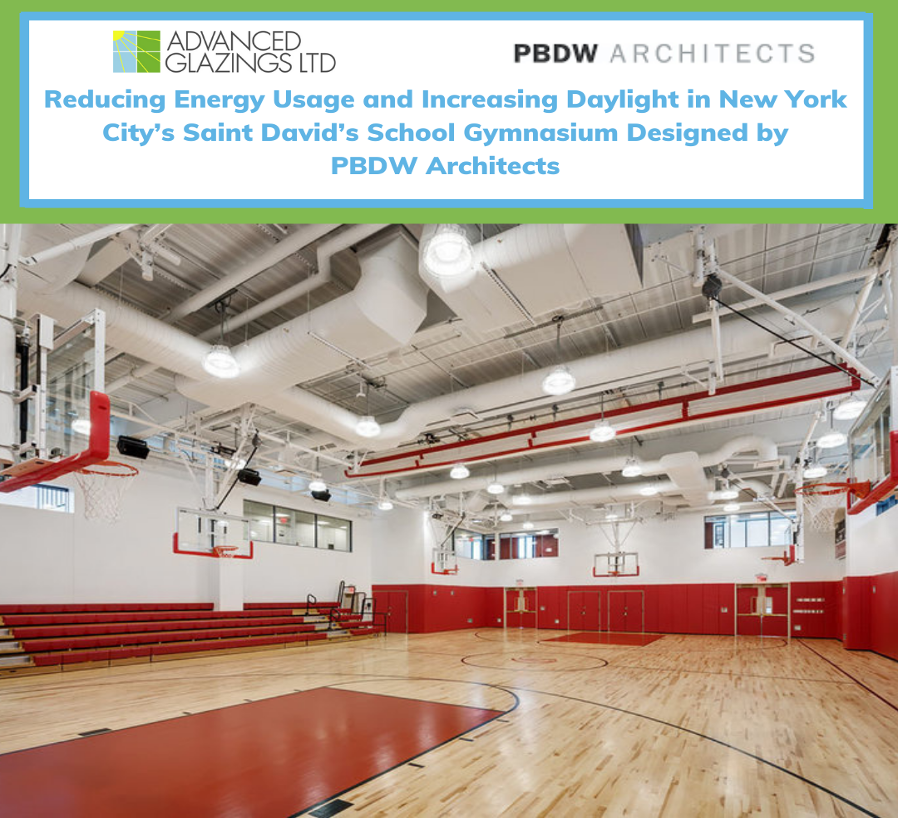
When you’re designing skylights in Manhattan, your neighbors are watching. For Saint David’s School, adding a new on-campus gym meant bringing in natural daylight, but with neighboring apartments towering above, they had to solve for light pollution at night. The solution also had to be a lifetime product, because the skylights would be 25 feet up and tucked behind sprinkler pipes, making replacement nearly impossible.
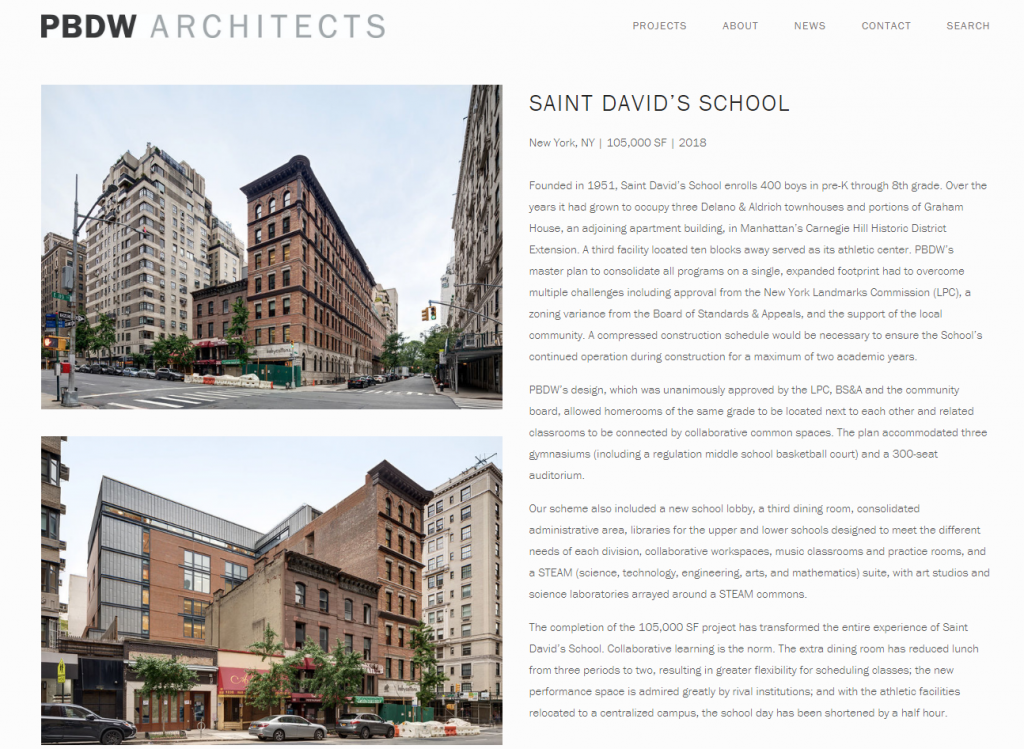
For years, students at Saint David’s School on New York’s Upper East Side had to be bused several times a day to an off-campus gym, extending their school day. In 2010, the school hired PBDW Architects to solve this problem by expanding into a neighboring 60,000 sq ft building and adding a full-size, on-campus gymnasium.
A key design requirement was to provide students with consistent access to natural daylight via skylights. But in a dense urban environment like the Upper East Side, this created a unique set of challenges.
❌ The Urban Skylight Dilemma
Designing skylights for a 7-story school surrounded by taller apartment buildings presented four critical constraints:
- Light Pollution Concerns: Neighboring tenants were concerned that a brightly lit gym would cause unwanted light pollution at night, shining up and into their apartments.
- The “Lifetime Product” Mandate: The architects did not want to specify a solution that would require replacement. Non-glass products can fade and degrade, and films or filters need to be replaced every 5-10 years.
- Inaccessible Location: The skylights were designed to be 25 feet above the gym floor and tucked behind sprinkler pipes, making any future replacement or maintenance extremely difficult and costly.
- Daylight Performance: In such a recessed location, a simple applied film would result in very little actual daylight entering the gym, defeating the primary purpose of the skylights.
Project Architect Tom Faust of PBDW Architects recalled the challenge: “Its location on the Upper East Side, which means neighboring apartments that tower above the 7-story school. Surrounding tenants were concerned the school’s new gym and perimeter glazing would cause unwanted light pollution at night.”

✓ The Solution: A Lifetime Product Validated by Daylight Modeling
Project Architect Tom Faust recalled attending an AIA presentation by Advanced Glazings on Architectural Daylighting and Managing Glare. He reached out for a daylight analysis to find a solution that could meet all four constraints.
The analysis proved that Solera® translucent glazing, used only in the skylights, would deliver the required daylight performance without needing any treatment on the façade windows. This targeted approach solved all the problems:
- No Light Pollution: The diffuse nature of Solera® prevents direct uplighting, addressing the neighbors’ concerns.
- A Lifetime Product: As a glass-based TGU, Solera® is a lifetime building product that won’t fade, yellow, or require replacement like plastics or films.
- Maintenance-Free: Because it’s a lifetime product, the difficult-to-access location was no longer a long-term liability.
- Proven Performance: The daylight model showed the client exactly how the space would feel and perform, giving them confidence in the solution.
The Proof: “The Lights Aren’t Even Turned On”
The success of the design is evident every day. According to Faust, “there are days the lights aren’t even turned on in the gym, even on cloudy days.” The school is saving on energy costs, and the daylight model proved to be “true to life,” helping the client understand the impact of the design before it was built.
The new on-campus gym has eliminated the need for busing, and students now have a beautiful, daylit space to play and learn. “We used a model and diagram to show the client how Solera would impact the space with the recommended configuration,” says Faust. “Solera solved all of their problems.”
The client is “very happy,” and Solera® “looks great in the space.” The daylight model was “true to life and helped the client understand the impact of daylight.”
The Takeaway: Urban Skylights Need Lifetime Solutions
In dense urban environments, skylight design requires a sophisticated approach. You need a solution that manages light pollution, delivers proven daylight performance, and won’t create a maintenance nightmare a decade from now.
Saint David’s School proves that with the right product and proper daylight modeling, you can create urban skylights that satisfy both your client and their neighbors—while eliminating the need for artificial lighting, even on cloudy days.