Your Building is an Asset. Is It Performing Like One?
A building that leaks energy, reduces employee productivity, or requires constant maintenance isn’t an asset; it’s a liability. Solera® turns your building envelope into a high-performance engine for ROI, delivering measurable gains in energy savings, human performance, and long-term value.
The 90% Problem: Why Most Buildings Underperform
The modern workforce spends 90% of their time indoors, yet most buildings are not designed to support human health or performance. Poor lighting leads to fatigue, eye strain, and reduced productivity. It’s a hidden drain on your bottom line. Investing in the well-being of your occupants isn’t just a perk—it’s a financial strategy.
Poorly lit environments can decrease employee productivity by up to 15% and are a leading cause of unscheduled absenteeism, costing an average of $3,600 per employee, per year.
(CIRCADIAN, Absenteeism: The Bottom-Line Killer; Lighting Design Lab, 1995)
Better Light. Better Performance. Better Numbers.
The business case for daylighting is clear and proven across every sector. By providing glare-free, full-spectrum natural light, you can unlock significant gains in sales, productivity, and health outcomes. This isn’t wishful thinking; it’s proven fact.
🛒
+19.5% Sales
Studies show daylighting increases customer dwell time by 15%. For every 1% increase in dwell time, sales rise by an average of 1.3%. Natural light also ensures true color representation for products.
(Heschong Mahone Group, 2002)
🎓
+26% Faster Learning
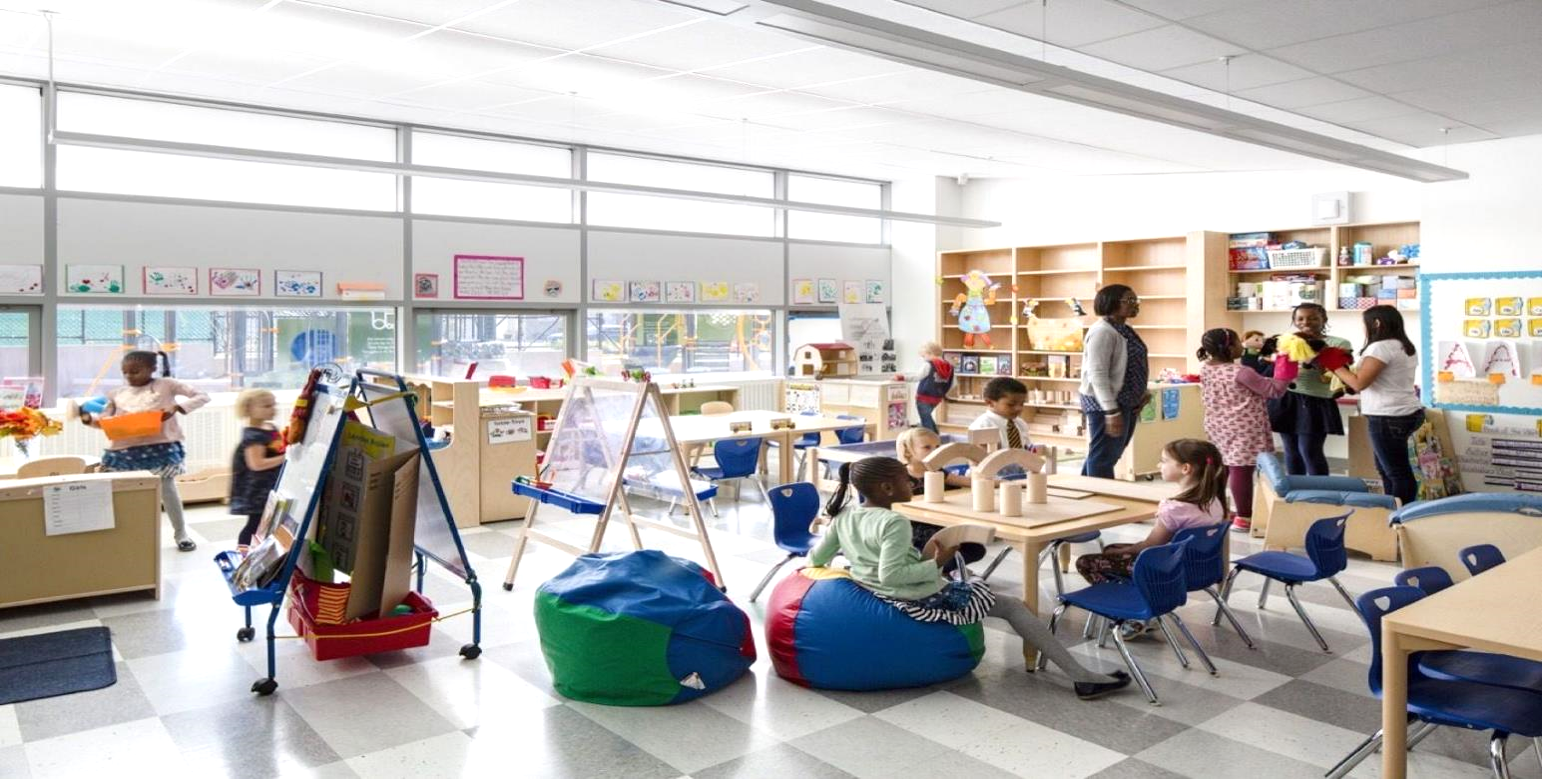
Students in daylit classrooms learn 20% faster in math and 26% faster in reading. This leads to better test scores, improved school ratings, and higher enrollment.
(Heschong Mahone Group, 1999)
💼
-15% Absenteeism
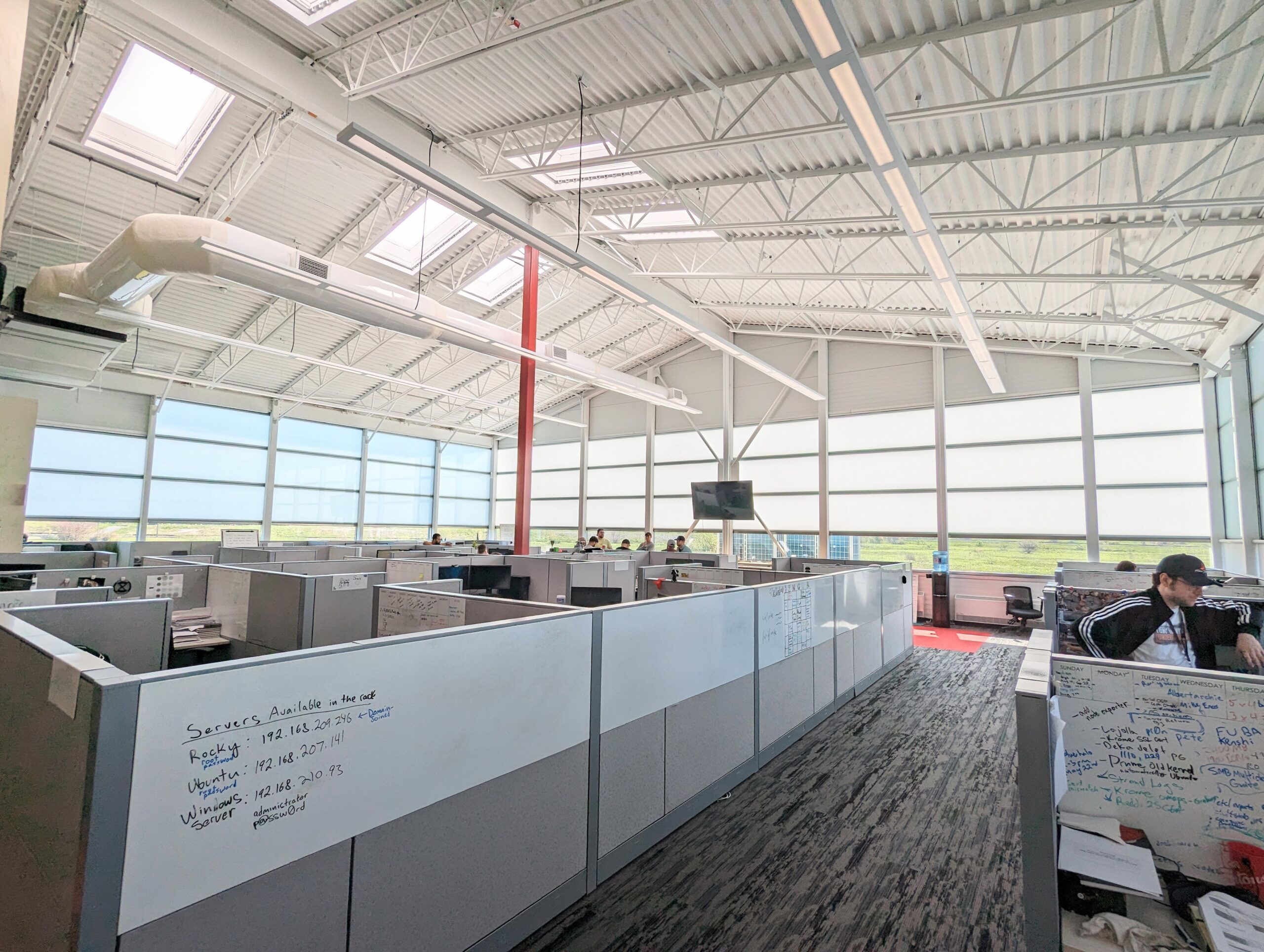
Offices with ample daylight see a 15% reduction in absenteeism and significant gains in productivity. It’s a direct boost to your operational efficiency.
(World Green Building Council, 2014)
🏥
16.8 Hours Shorter Stays
Cardiac patients in daylit rooms have hospital stays reduced by an average of 16.8 hours. Faster patient recovery leads to lower costs and higher throughput.
(Clemson University, 2023)
Your Building Is Worth More With Daylight.
Natural light isn’t just good for the people inside your building — it’s good for the building’s bottom line. Daylit spaces command measurably higher rents and attract higher-quality, longer-term tenants.
5–6%
Office Rent Premium
Office spaces with high levels of daylight command a 5–6% rent premium over comparable spaces with low daylight levels.
(Turan, Chegut, Fink & Reinhart, MIT / Building and Environment, 2020)
6%
Premium for Daylight + Views
When a space offers both high daylight access and quality views, tenants pay an additional 6% net effective rent premium — on top of base market rates.
(Turan, Chegut, Fink & Reinhart, MIT / Landscape and Urban Planning, 2021)
#1
Tenant Priority
Access to natural light consistently ranks as the top priority for office tenants when selecting or renewing a lease — above proximity, amenities, and even price.
(CBRE Occupier Survey; World Green Building Council, 2014)
The Default Solutions Don’t Work.
Most buildings default to one of two approaches when it comes to managing light.
Neither one actually solves the problem.
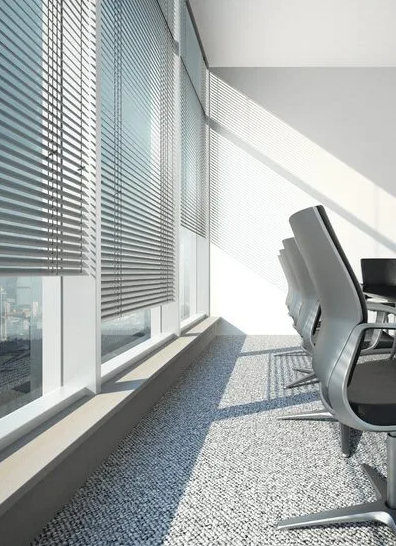 Vision Glass + Blinds
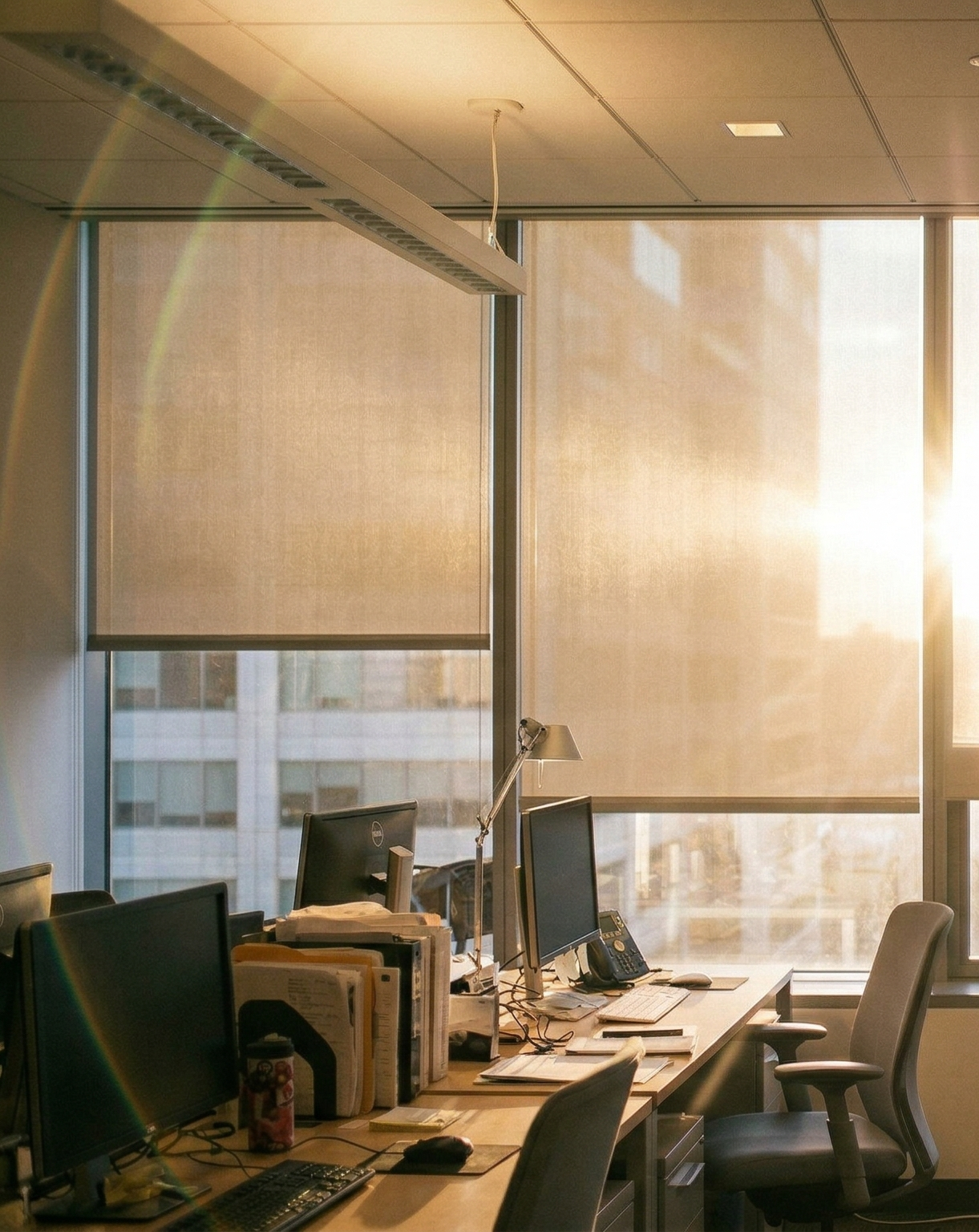 Tinted & Reflective Glass
Vision Glass, Tinted & Reflective Glass
The two most common approaches. Both end up in the same place.
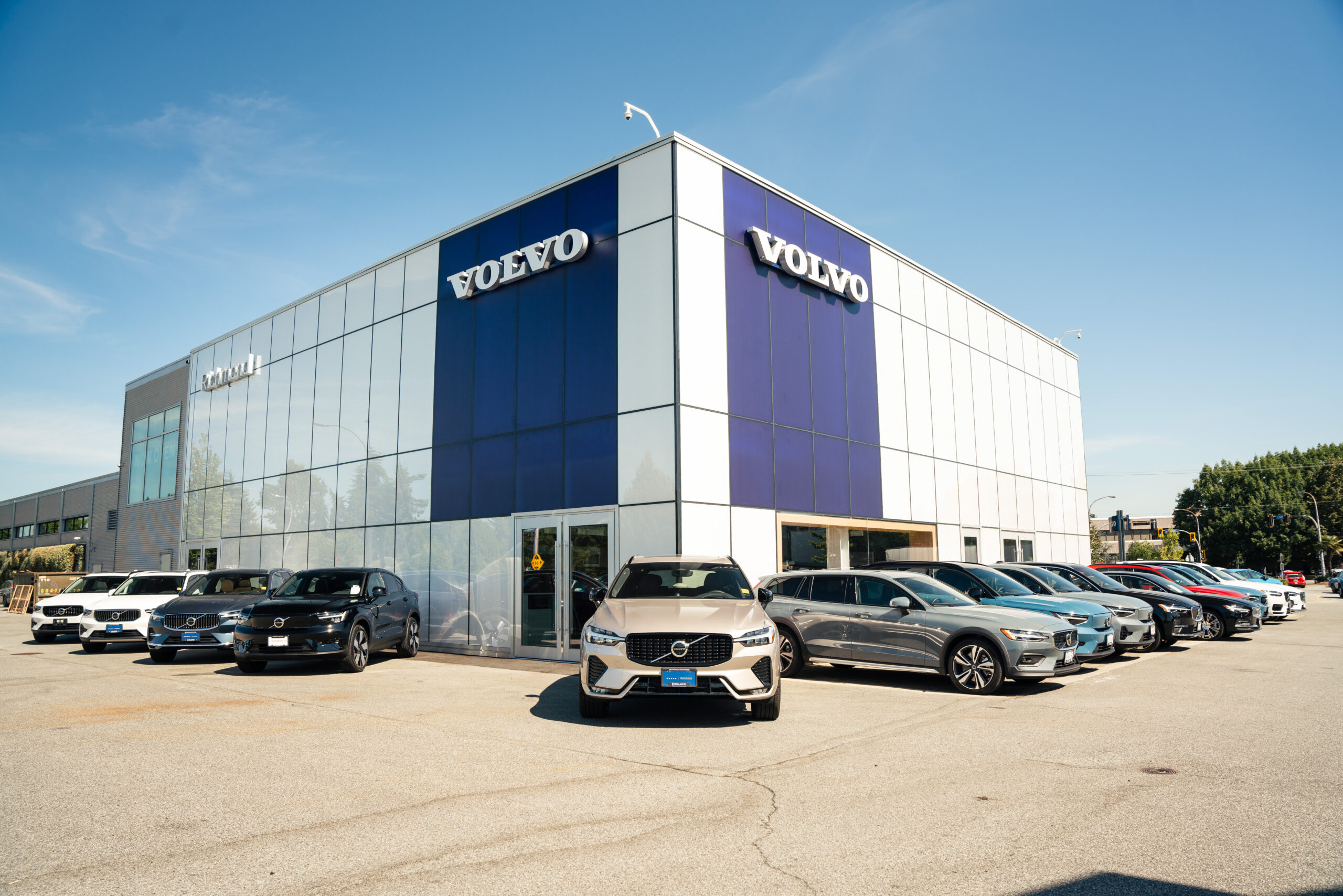
Clear glass admits light, glare, and heat all at once. Tinted and reflective coatings reduce light but cannot block direct sun glare. Either way, blinds and shades are still required on bright days. Studies show those blinds stay closed most of the time, even when they are not needed, cutting occupants off from the outside world and pushing the building back onto artificial lighting.
Blinds are expensive to install, costly to maintain, and unsightly from both inside and outside. Standard glazing offers minimal insulation, driving up HVAC loads to manage heat gain in summer and heat loss in winter. The glare problem is not solved. It is just hidden.
The real problem isn’t too much light — it’s the wrong kind of light.
What buildings actually need is a way to admit abundant natural light while eliminating glare and controlling heat gain. That’s not a blind problem. That’s a glazing problem. And there’s a whole category of architectural glass designed to solve it.
Translucent Glazing: The Right Answer — But Not All Options Are Equal.
The ideal translucent glazing admits abundant, glare-free natural light while providing exceptional insulation — no blinds, no tints, no compromise. It’s the architectural solution that actually solves the problem. But there are several types on the market, and choosing the wrong one can be a costly mistake.
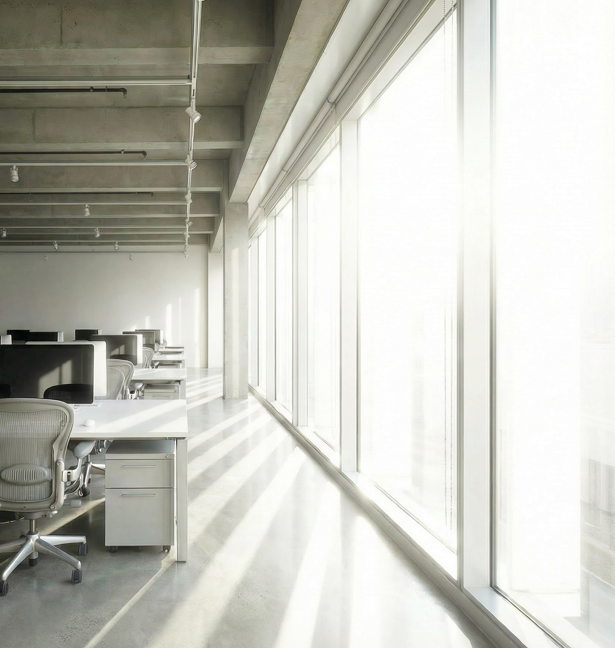
The Assumed Choice
Frosted & Acid-Etched Glass
Works for: Privacy. Looks good. Glass lasts.
Fails at: Poor insulation. Glare and hot spots persist. Blinds still go up.

The Cheap Choice
FRP, Polycarbonate & Plastics
Works for: Good diffusion. Good insulation. Lower upfront cost.
Fails at: Yellows, leaks, and degrades. Full replacement in 10–20 years. Cheap upfront, expensive over time.
Recommended
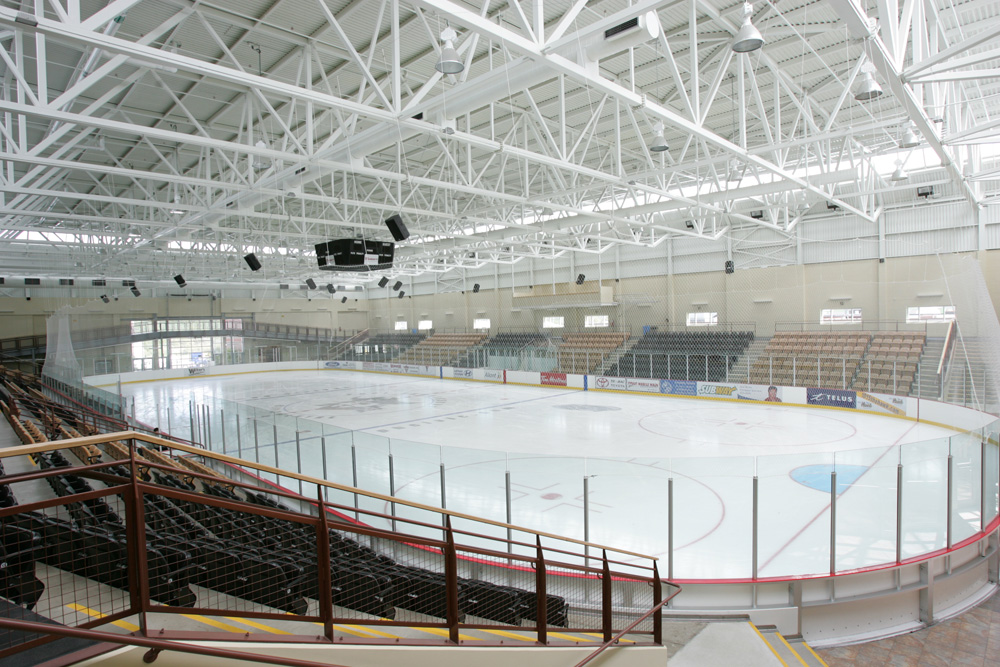
The Right Choice
Solera® Translucent Glazing Units
Works for everything: Glare-free daylight. R-25 insulation. Lights off during the day. Glass-based — lasts the life of the building.
No compromises: No yellowing. No blinds. No replacement cycles. Lowest total cost of ownership in the category.
An Iconic Glow. A Recognizable Landmark.
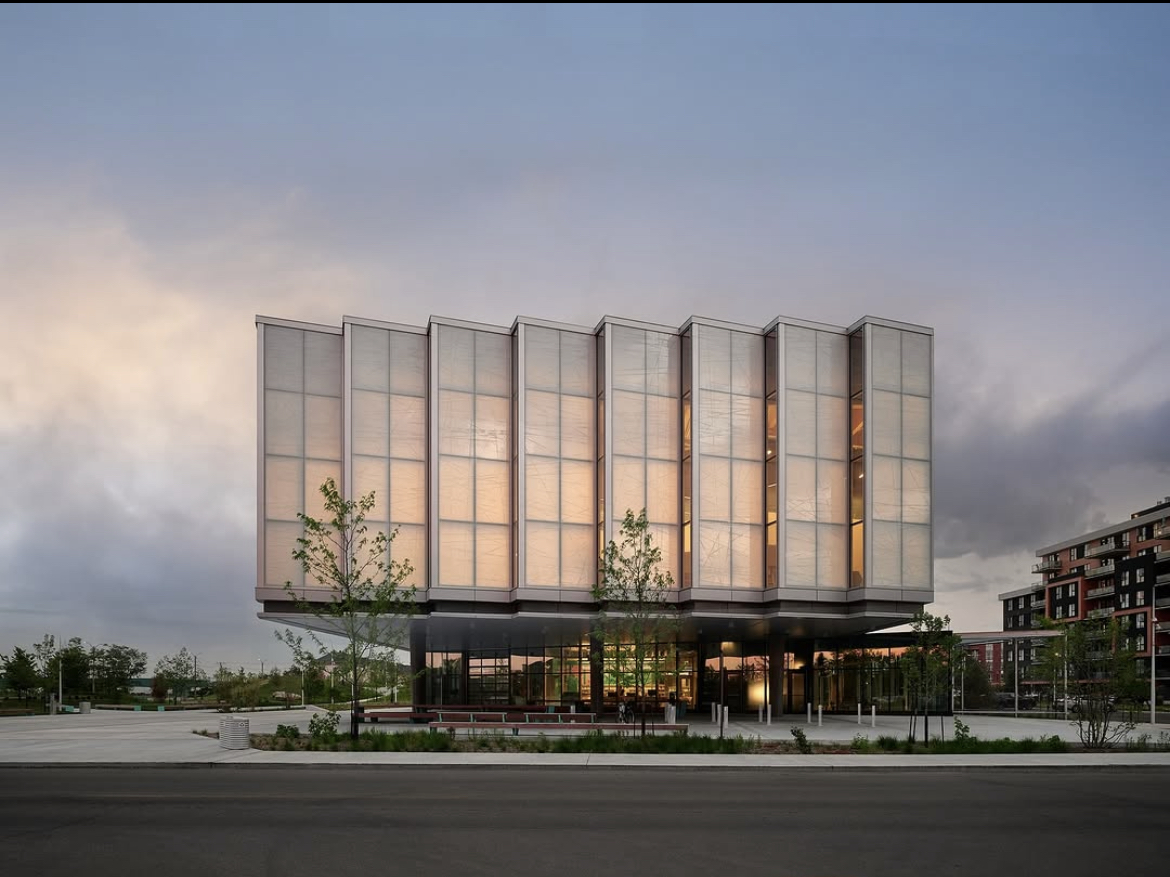
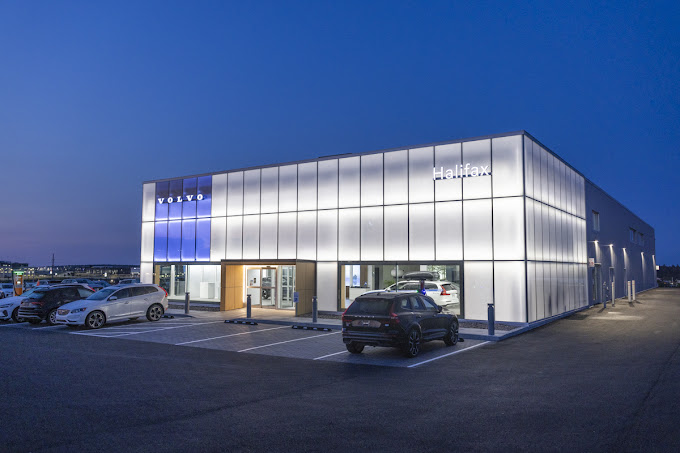
At night, a Solera®-clad building transforms into something remarkable — a warm, luminous beacon that stands apart from the dark glass towers around it. That distinctive glow is not just beautiful; it’s a branding asset. Your building becomes recognizable, memorable, and associated with quality — a landmark that reinforces the value of every square foot inside it.
Your Shed. Your Rules. No Dark Box.
The Outlier Shed is what happens when a metal building stops being storage and starts being the best room you own. Bright, private, and built to last — with Solera® glass, not plastic. The cost difference is smaller than you think.
See the Outlier Shed ›
The Best Insulating Glass on the Planet.
Your building’s envelope is its first line of defense against energy loss. Solera® provides an unprecedented level of insulation, dramatically reducing your HVAC and artificial lighting costs year-round.
R-25
Thermal Resistance
(Compared to R-2 for standard double-pane glass and R-13 for a typical wall)
📉 Slash HVAC Costs
With insulation that outperforms most opaque walls, Solera® significantly reduces heating and cooling loads, allowing for smaller, less expensive HVAC systems and lower monthly energy bills.
💡 Reduce Artificial Lighting
By filling your space with beautiful, usable daylight, you can significantly reduce reliance on artificial lighting for most of the day, cutting electricity consumption by up to 30%. Less artificial light also means healthier occupants — more on that below.
🌱 A Greener Building
Lower energy consumption means a smaller carbon footprint, helping you meet sustainability goals and attract tenants who value environmental responsibility.
Better Buildings for Humans.
Beyond the numbers, creating a healthy indoor environment is the right thing to do.
We spend our lives inside these buildings; they should support our well-being.
Learn more about the movement to create healthier, more productive spaces.
The Hidden Cost of Artificial Light
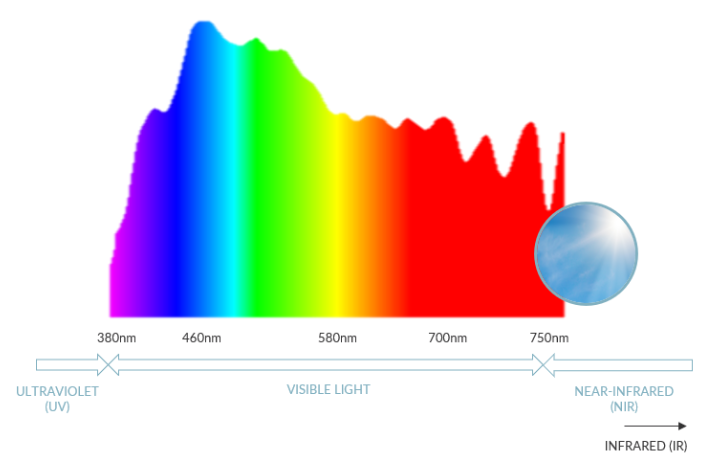
Modern LED lighting is energy-efficient — but it comes with a biological cost most building owners never consider. LEDs emit a heavily blue-shifted spectrum, rich in the short wavelengths (420–450nm) that suppress melatonin and disrupt circadian rhythms. At the same time, they are almost entirely deficient in the red and near-infrared wavelengths (670–900nm) that natural sunlight delivers in abundance.
Those longer wavelengths play a critical role in cellular energy production, mitochondrial function, and recovery. Without them, occupants experience a kind of “light starvation” — increased fatigue, disrupted sleep, reduced alertness, and over time, measurable impacts on long-term health.
Solera® brings full-spectrum natural light indoors — giving your building’s occupants the complete light diet their biology actually needs, and giving you a building that genuinely supports the people inside it.
Read More Here ›
Better Buildings for Humans Podcast
What does it actually take to build a high-performing, human-centred building? We ask the people who know. Building owners, architects, health researchers, structural engineers, and sustainability experts share what they have learned from real projects, real occupants, and real results.
Episodes cover the science of light and human health, the hidden ROI of daylighting, what tenants actually want, how building envelope decisions affect long-term asset value, and why the buildings that perform best for people also perform best financially. If you own or manage a building, this is worth your time.
Listen Now
Let’s Talk About Your Project.
Every building is different. Connect with an architectural product consultant and find out how Solera® can work for yours.