


← Back to Insights & Resources
Can We Get Natural Daylight in a Hockey Arena?
Why would a town council ask if they could put natural daylight into a 2,500-seat hockey arena? The question challenges decades of conventional wisdom. Arenas are supposed to be windowless boxes, dependent on expensive, 24/7 artificial lighting. But in 2004, the Town of Port Hawkesbury asked anyway.
They didn’t just want a rink; they envisioned a pioneering green facility that could serve their community and host the world. Architect Robert Ojolick, FRAIC, delivered, creating a space so innovative it was recognized by Business Week as one of the “Top Ten World-Class Sports Stadiums” in the world. This is the story of how they did it.
❌ The Hockey Arena Dilemma
Traditionally, bringing natural light into an arena is a non-starter. The risks are too high:
- Glare: Uncontrolled sunlight can blind players and create unsafe conditions on the ice.
- Heat Gain: Solar heat gain can compromise the ice surface and drive up cooling costs.
- High Operating Costs: The default solution is to run artificial lights from morning to night, leading to massive energy bills.
- Lack of Versatility: A space designed only for hockey is often a poor venue for community events, concerts, or festivals.
Port Hawkesbury needed to solve all these problems. They needed a versatile, world-class venue that was also a financially sustainable community asset.
✓ The Solution: An Engineered Daylighting System
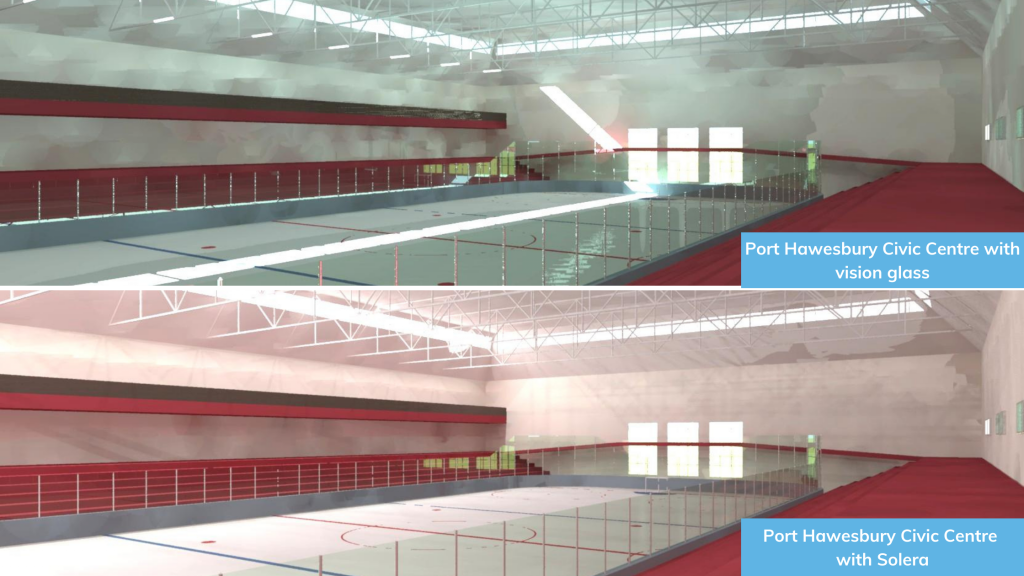
To answer the council’s challenge, Ojolick Architects turned to an engineered solution: Solera® translucent glazing units.
Instead of fighting the sun, they controlled it. By integrating Solera® into the arena’s roof, they could diffuse the harshest overhead light, scattering it evenly throughout the space. The system provided:
- Abundant, Glare-Free Light: A soft, full-spectrum light that illuminates the entire arena without creating hot spots or glare.
- Thermal Performance: The engineered panels provided the necessary insulation to protect the ice surface and reduce energy demands.
- Proven Predictability: Advanced Glazings’ daylight modeling services provided visual proof of how the space would perform, removing the guesswork and giving the client confidence before construction.
Over 2 Decades of World-Class Performance
The Port Hawkesbury Civic Centre didn’t just meet expectations; it has been exceeding them for over two decades. The initial gamble on daylight has paid off in three major ways.
1. Massive Energy Savings
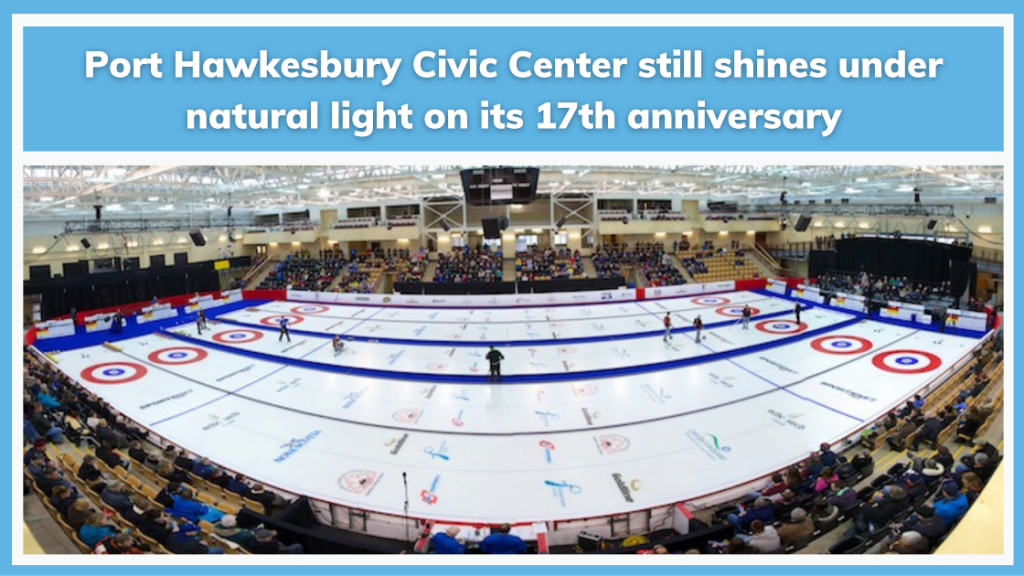
The most significant impact has been on the bottom line. The natural light is so effective that the facility operates without any artificial lighting for most of the day.
For over 22 years, that’s approximately 8 hours of zero lighting costs, every single day.
2. A Truly Versatile, World-Class Venue
The quality of the space attracted events the town could only dream of before. The arena has proven its versatility by hosting an incredible range of national and international events:
🏒 NHL Training Camp
The Florida Panthers chose Port Hawkesbury for their training camp—proof that elite athletes thrive in naturally lit spaces.
🥌 Grand Slam of Curling
The National Grand Slam of Curling selected this venue for its world-class facilities and exceptional lighting conditions.
🏆 World Hockey Championship
The Under 17 World Hockey Championship brought international competition to Port Hawkesbury’s naturally lit arena.
🎵 Celtic Colours Festival
The Celtic Colours International Festival uses the space annually, proving its versatility beyond sports.
3. Unquestionable Durability
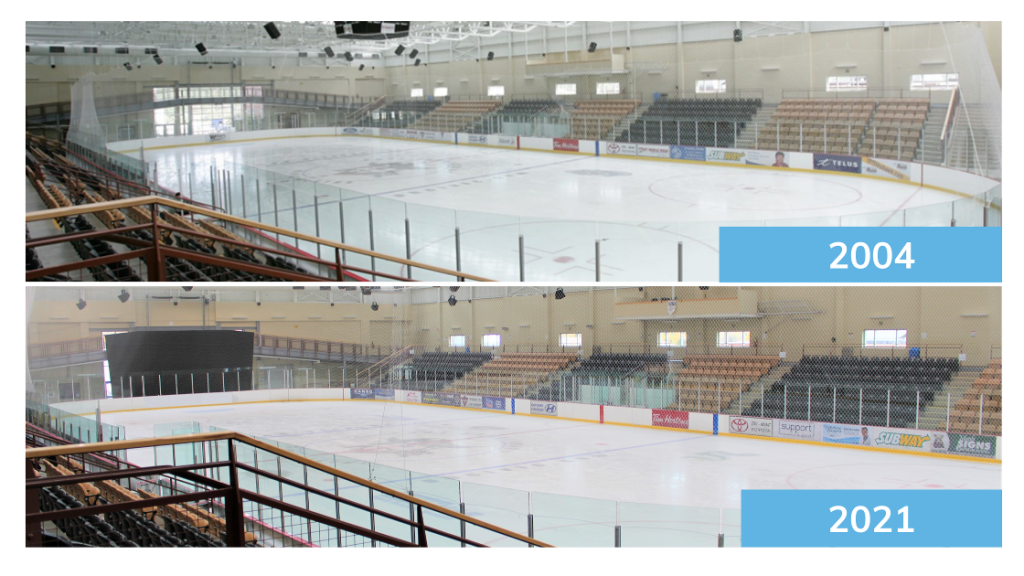
After over 22 years of harsh Nova Scotian winters and intense sunlight, the Solera® panels continue to perform exactly as they did on day one. There has been no yellowing, no degradation, and no loss of performance, proving the long-term value of investing in a high-quality, engineered system.
The Result: A Landmark and a Legacy
By challenging conventional wisdom, the Town of Port Hawkesbury created more than just a building. They created a community hub, an economic driver, and a landmark recognized on the world stage. The project stands as definitive proof that natural daylight in arenas isn’t just possible—it’s superior.
The facility also serves as a connector between the civic centre and the adjacent school, creating a unified community venue with shared library, pool, and theater spaces—exactly the vision the town council had from the beginning.