



← Back to Insights & Resources
Why Lifeguards Can’t See Through Glare (And How It Puts Swimmers at Risk)
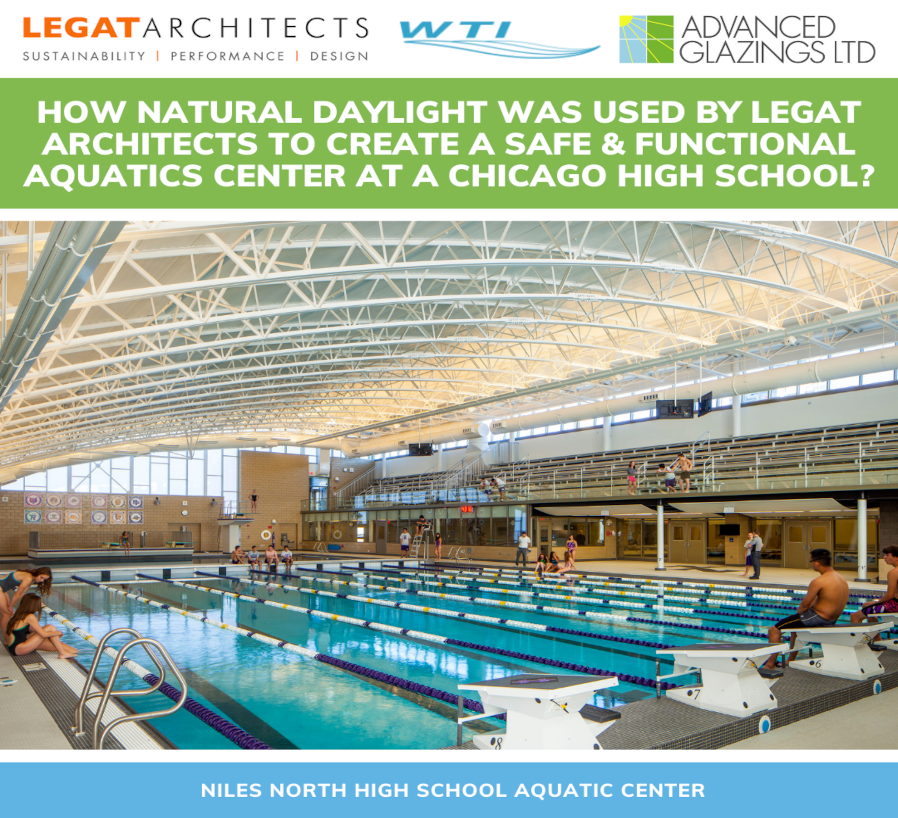
Aquatic centers need natural daylight, but uncontrolled glare on water surfaces can make it impossible for lifeguards to see swimmers clearly. For a high school serving 2,100 students from 5:30am to 10pm, this isn’t just an inconvenience—it’s a safety liability. This was the critical challenge facing Legat Architects when designing the new Niles North High School Aquatics Center.
When Legat Architects was tasked with designing a new aquatics center for Niles North High School in Skokie, Illinois, the primary goal was clear: improve safety for all pool users. The facility needed to serve 2,100 students and the wider community for over 16 hours a day, and every design decision had to prioritize the ability of lifeguards to see clearly into the water at all times.
This created a paradox. Natural daylight is essential for creating a healthy, welcoming, and energy-efficient aquatic environment. But traditional overhead glazing creates veiling reflections and blinding glare on the water’s surface, obscuring a lifeguard’s view and putting swimmers at risk.
❌ The Aquatic Center Daylighting Dilemma
Designing a safe and functional aquatic center presents a unique set of interconnected challenges:
- The Glare Safety Problem: Glare on the water’s surface from overhead glazing can make it impossible for lifeguards to see a swimmer in distress. For a facility this busy, ensuring a glare-free view into the pool was a non-negotiable safety requirement.
- The High-Humidity Environment: Pools are harsh environments with constant humidity and airborne chemicals. The chosen glazing had to offer high thermal insulation to control condensation and be durable enough to resist scratches and degradation over time.
- The Heavy Use Schedule: Operating from 5:30am to 10pm daily for both students and the community meant the facility had to be exceptionally durable, functional, and energy-efficient.
- The LEED Gold Mandate: The project was targeting LEED Gold certification, requiring a design that significantly reduced energy use compared to a standard building.
✓ The Solution: A Curved Roof with Engineered Daylight Diffusion
The project team, working with consultants at Water Technology Inc., reviewed all glazing options, including both glass and polycarbonate. They selected a glass-based system for its superior value, aesthetics, longevity, and scratch resistance.
The design features a dramatic curved roof structure, and for the translucent glazing in this roof, they chose Solera® because it solved all four challenges simultaneously:
- Safety: Solera® diffuses overhead daylight uniformly, eliminating direct glare on the water and giving lifeguards a clear, unobstructed view from any angle.
- Durability: As an all-glass product, it’s impervious to the moisture, humidity, and chemicals of a pool environment.
- Thermal Performance: Its high insulation value helps control condensation and humidity, contributing to better air quality and lower energy costs.
- Sustainability: It was a key contributor to the project’s LEED Gold certification and its 44% reduction in energy use.
The Proof: From LEED Gold to an Olympic Gold Medalist’s Praise
The success of the Niles North Aquatics Center is validated by three key outcomes:
1. LEED Gold Certification: The design achieved its sustainability goals, with a 44% reduction in energy use compared to a standard code-compliant building and 31.5% annual energy savings.
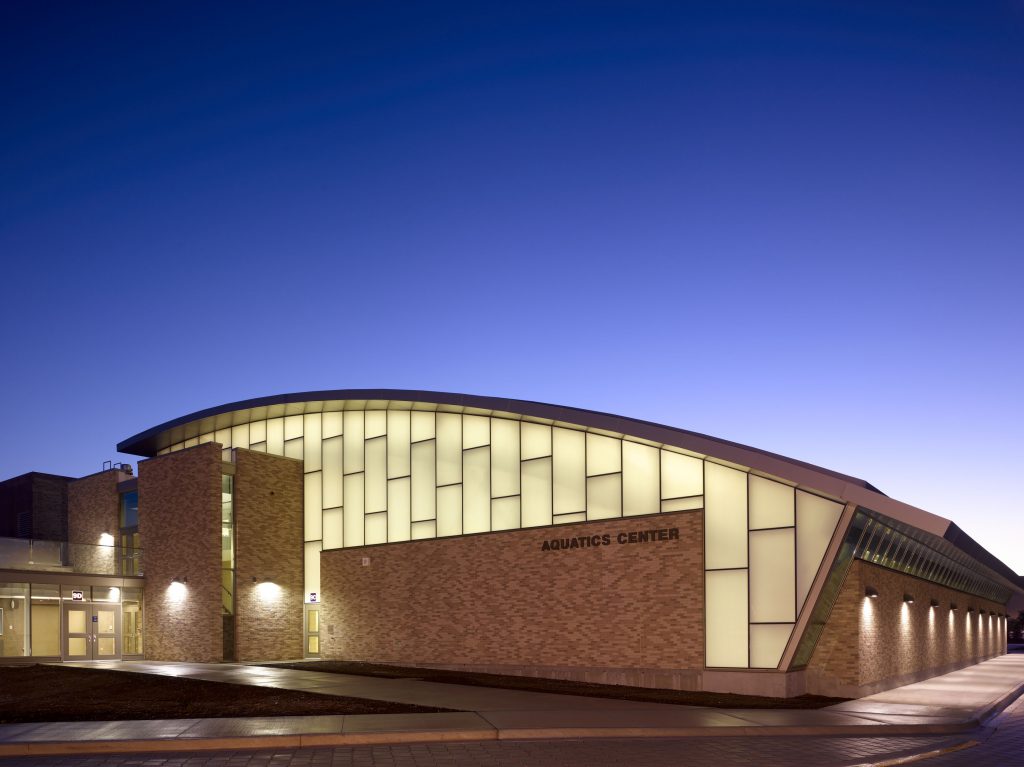
2. A Glowing Community Landmark: The building’s iconic curved roof, filled with Solera®, glows at night and is visible from the nearby highway, serving as a beacon for the school and community.
3. Endorsement from the Best: The facility’s quality is so high that it has earned praise from the highest levels of the sport.
The Niles North High School Aquatic Center has become a well-known landmark in the community. At night, the curved roof glows and can be seen from the highway, serving as a great advertisement for the school and community.
This space is a highly used aquatics center for students throughout the day and for community members in the mornings, evenings, and weekends. Students, community members, and athletes love using the new aquatic center for training and competitions.
“We wanted to create something interesting and responsive to the functional and safety needs of this new expansion. The client is extremely happy with the outcome of this space and they got exactly what they were looking for with the end design,” says Ted Haug.
The Takeaway: Safety First, Daylight Second
For aquatic centers, safety isn’t negotiable. The right overhead daylighting solution enables lifeguards to see clearly while delivering energy savings, superior air quality, and a welcoming environment for swimmers.
The Niles North Aquatics Center proves that with engineered daylight diffusion, you can create facilities where safety and sustainability work together—where lifeguards have clear visibility, swimmers enjoy exceptional air quality, and the community gains a glowing landmark that inspires pride.