



← Back to Insights & Resources
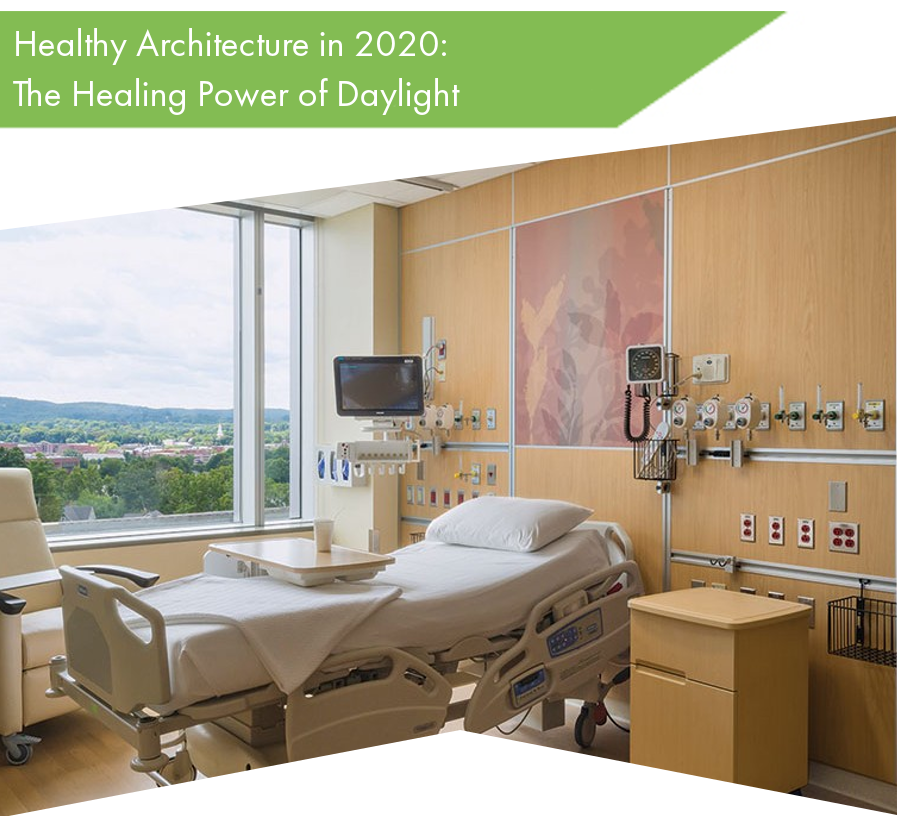
The Healing Power of Daylight in Modern Healthcare Design
In today’s healthcare environments, architects and building owners are designing medical and hospital spaces in a more holistic way, recognizing the impact both energy efficiency and healthy environments play in the overall building and well-being of its inhabitants. “In building, wellness is the new sustainability. The goal is to make our built environment more physically healthy for people,” says Jonathan Penndorf, an architect with the Washington, D.C., firm Perkins+Will.1
Healthy architecture is a life-changing and contemporary design concept that has been evolving for decades. With the introduction of certifications including LEED, BREEAM, WELL, and Fitwel—healthy architecture is at the forefront of building construction.
Healthcare is one sector that continues to be top of mind from both cost and patient perspectives. Building owners, healthcare professionals, and patients recognize the importance of ‘healthy buildings’ and how architecture can impact overall patient well-being and recovery.
The Evidence: Natural Light Shortens Hospital Stays by Up to 41%
The benefits of healthy architecture include natural light, which is reported in research showing patients recovering in rooms and spaces with natural light shorten their hospital stay length by 16%-41%.2
In addition to reduction in hospital stay, natural light has also been shown to improve the mental well-being of patients and reduce post-operative side effects such as post-operative delirium.3
⚠️ Post-Operative Delirium: A Preventable Complication
Anesthesiologist Dr. Colin Noble says “there are many non-pharmaceutical ways to help prevent delirium with the Cleveland and Mayo Clinics offering recommendations including natural light.” Both clinics recommend adding a daily dose of natural light into the recovery plan for post-operative patients to reduce the chances of patients developing delirium.4
Delirium is complicated and needs to be reviewed for all post-operation patients, especially in the elderly. Delirium poses risk factors for complications, a longer length in hospital stay, and discharge to a post-acute nursing facility.5
An Abundant, Sustainable, and Free Resource
While natural daylight is only one element, studies support healthy architecture as it contributes to the overall well-being of patients and their recovery. In addition to its direct contribution to healing, this natural resource is abundant, sustainable, and free. It is aching to be utilized in the midst of carbon neutral regulations, net zero buildings, and climate action strides across the globe.
The question isn’t “Should we incorporate daylighting into healthcare projects?”
The question is “How do we do it right?”
✓ How to Create Exceptional Healing Spaces
Solera® and SoleraWall®, by Advanced Glazings Ltd., can help you create healthy and sustainable healthcare buildings that optimize patient and provider experience.
Full Design Assistance: Advanced Glazings Ltd. delivers full design assistance including resources and daylight modeling for healthcare facility designers globally.
Building-Integrated Solutions: Solera® and SoleraWall® family of glass daylighting façade products are building-integrated solutions allowing architects the flexibility in design to configure and control:
- Correct Illumination: Optimize light levels for patient comfort and healing
- Light Diffusion: Eliminate glare and harsh shadows that cause discomfort
- Visible Light Transmittance: Control how much daylight enters the space
- Solar Heat Gain Properties: Manage thermal comfort without sacrificing daylight
- Superior Acoustic Performance: Reduce noise for better patient rest and recovery
- Thermal Insulation: Ranging from R2.2 to R18 for energy efficiency
The Takeaway: Healing Environments Start with Daylight
In modern healthcare design, the evidence is clear: natural daylight shortens hospital stays, improves mental well-being, and reduces post-operative complications like delirium. With certifications like LEED, BREEAM, WELL, and Fitwel driving healthy architecture forward, daylighting is no longer optional—it’s essential.
The challenge isn’t whether to incorporate daylight into healthcare facilities. The challenge is how to do it right: controlling illumination, diffusion, transmittance, and solar heat gain while achieving superior acoustic performance and thermal insulation.
With the right daylighting solutions and full design assistance, you can create exceptional healing spaces that maximize patient and provider experience—using an abundant, sustainable, and free natural resource that contributes directly to recovery and well-being.
Sources:
- National Geographic: Surprising Ways Green Buildings Improve Health & Sustainability
- Designing Buildings: Daylight Benefits in Healthcare Buildings
- Designing Buildings: Daylight Benefits in Healthcare Buildings
- Cleveland Clinic: Delirium Management and Treatment and Mayo Clinic: Delirium Symptoms and Causes
- New England Journal of Medicine: Delirium in Hospitalized Older Adults