



← Back to Insights & Resources
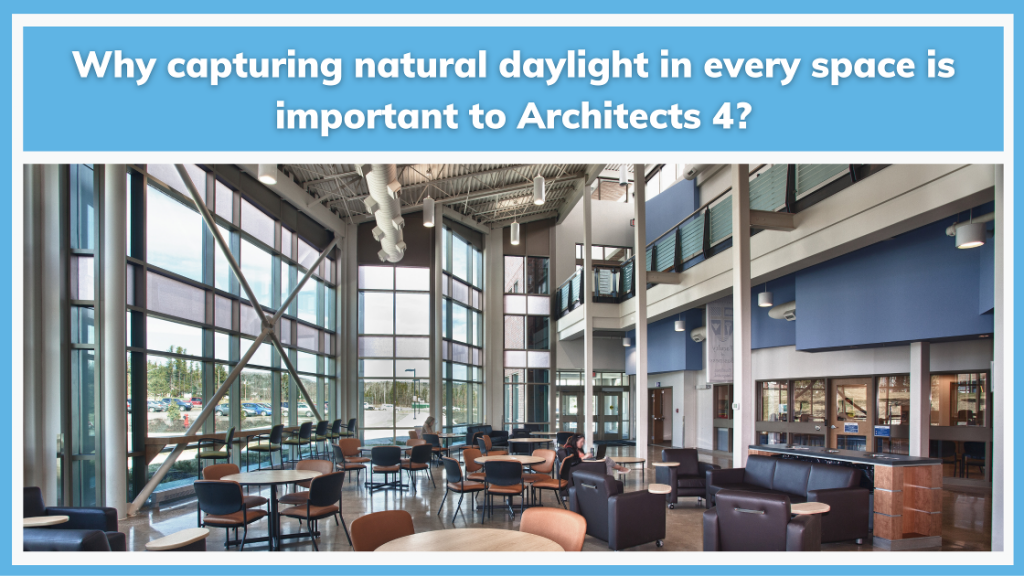
Why Architects 4 Has Trusted the Same Daylighting System for 15 Years
Why would a successful architecture firm use the same daylighting product for over 15 years, across schools, universities, and corporate offices? The answer isn’t about brand loyalty. It’s about something far more valuable to an architect: predictable results.
Architects 4, based in Moncton, New Brunswick, has been designing daylighted projects for over forty-five years across Atlantic Canada. For them, creating comfortable spaces that capture and control natural light is a core element of their architectural practice. But as any architect knows, daylighting is a gamble—unless you have a system that removes the guesswork.
❌ The Architect’s Gamble: Why Uncontrolled Daylight is a Risk
Uncontrolled daylight can lead to glare, excessive heat gain, visual contrast issues, and occupant complaints. These aren’t just comfort problems—they’re reputation problems. When a building fails to perform as designed, it’s the architect who gets the call.
The traditional “solution”? Occupants deploy blinds and shades, which defeats the entire purpose of daylighting in the first place. For an architect committed to creating healthy, naturally lit spaces, this outcome is unacceptable.
The question: How do you capture natural daylight in primary schools, universities, and office buildings without harmful glare, solar heat gain, or visual contrast issues?
✓ The Predictable System: Solera® + Daylight Modeling
For Architects 4, the answer wasn’t just a product—it was a system. The combination of Solera® engineered light diffusers and complimentary daylight modeling services created something architects desperately need: predictability.
As Alain Malenfant, Principal at Architects 4, explains: “The models played a major factor for the correct veil combination and optimal visible light transmittance, which is something you can’t guess at.”
That last phrase is critical: “which is something you can’t guess at.” Architects don’t guess. They design with confidence, backed by data. And that’s exactly what the daylight modeling service provides—visual proof of how Solera® will perform before a single unit is installed.
A Portfolio of Proof: Four Projects, Four Solutions
Over the past 15 years, Architects 4 has used Solera® in an increasingly diverse range of projects. Each one solved a specific daylighting challenge, and each one reinforced their trust in the system.
Ecole St. Therese
The first LEED-certified school built by the provincial government of New Brunswick. The Challenge: Bring natural daylight into the gymnasium without blinding players. The Solution: Solera® controlled the natural daylight and created a diffused environment for students.
Ecole le Galion & Ecole Arc-en-ciel
After the success at Ecole St. Therese, Architects 4 applied the same approach to cafeterias in two additional primary schools. The Challenge: Create comfortable eating spaces with equal, deep light distribution. The Solution: Solera® removed dark spots and visual contrast issues.
Crandall University
A unique application combining Solera® translucent glazings with vision glass. The Challenge: A large exterior wall with strong summer sunlight that could create problems for students and staff. The Solution: Solera® in the top lights distributed harsh light to create a comfortable, year-round space.
Gemtec Engineering Building
An office building with clusters of offices in the center and cubicles in surrounding areas. The Challenge: Bring daylight into central spaces without glare on computer screens. The Solution: Solera® eliminated glare while providing comfortable, natural light for office workers.
Why Solera® Works for Architects 4
The success of Architects 4’s daylighting projects isn’t accidental. It’s the result of a deliberate design process that combines engineered light diffusion with predictive modeling. This approach allows them to design with confidence, knowing exactly how the space will perform before construction begins.
This predictability is what transforms Solera® from a product into a system. It’s not just about the glazing itself—it’s about the ability to visualize, predict, and optimize the daylighting performance before making any commitments.
The Versatility: Vision Glass + Solera®
One of the most compelling aspects of Architects 4’s experience with Solera® is its versatility. As their projects evolved, they discovered that Solera® doesn’t replace vision glass—it complements it.
This insight is critical. Solera® isn’t an “either/or” choice. It’s a strategic tool that architects can deploy in specific locations—high windows, clerestories, skylights—where views aren’t needed but controlled daylight is essential. Combined with vision glass in other locations, it creates the best of both worlds: views where they matter, and glare-free daylight where it’s needed.
The Takeaway: Trust Through Predictability
Architects 4’s 15-year relationship with Solera® isn’t about brand loyalty. It’s about trust earned through predictable, repeatable results. Every project reinforced what they learned in the first one: with the right system, daylighting doesn’t have to be a gamble.
For architects who are committed to creating healthy, naturally lit spaces—but who can’t afford the risk of glare, heat gain, or occupant complaints—the combination of Solera® engineered light diffusers and complimentary daylight modeling provides exactly what they need: confidence backed by data.